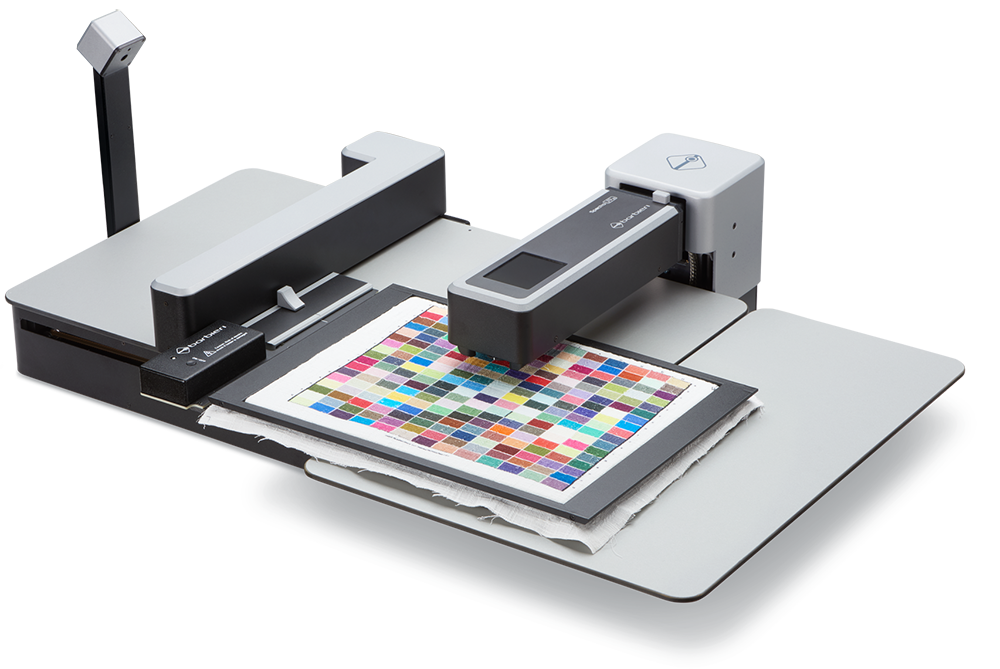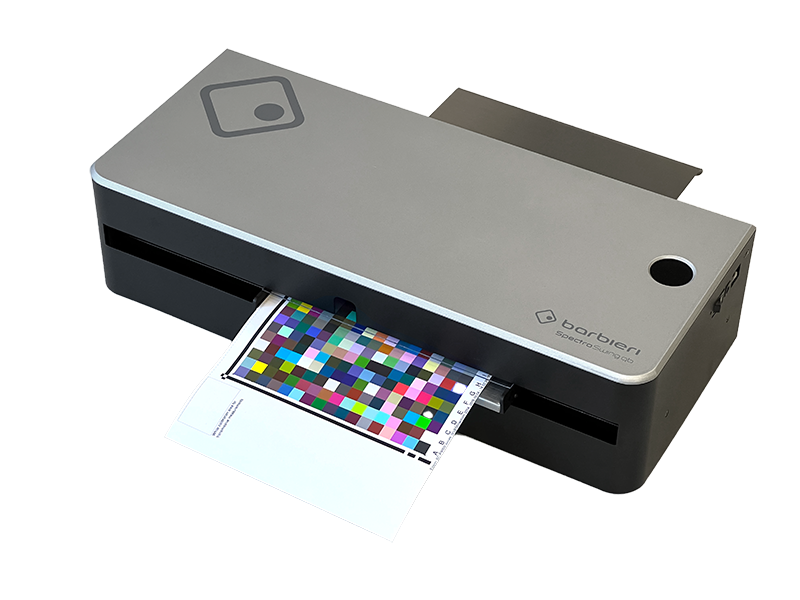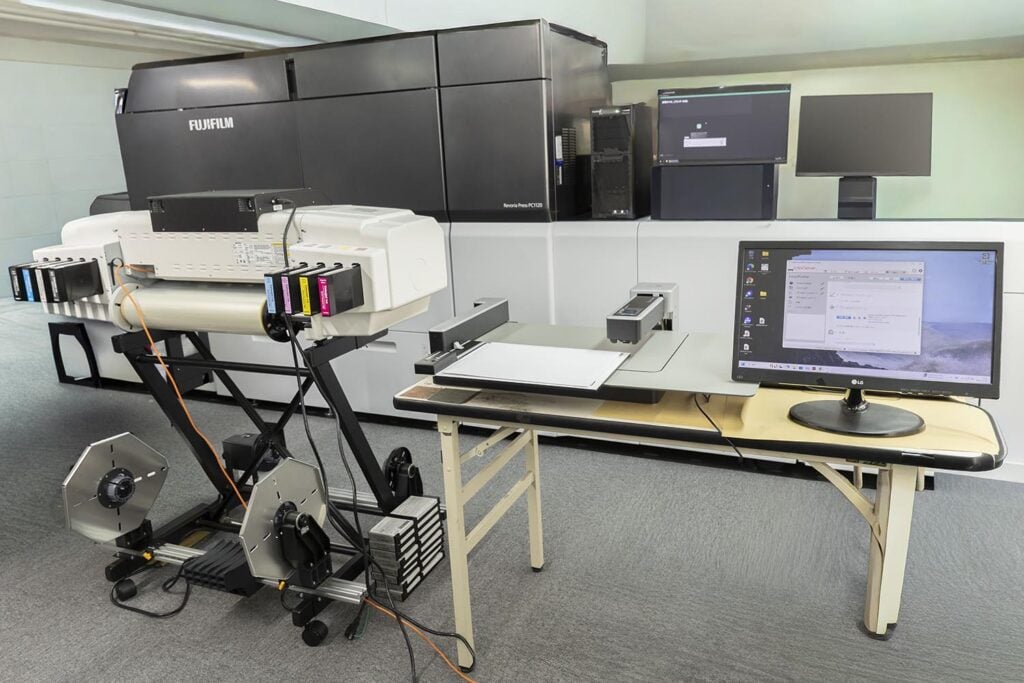



Achieve reliable and repeatable color measurement across aqueous, solvent, UV cured, latex, sublimation, pigment, and toner based digital printing systems. Barbieri spectrophotometers provide accurate spectral data for ICC profiling and color quality control across diverse printing technologies, materials, and production workflows.

Color Measurement Across Ink Technologies

Reliable color measurement across different printing technologies

Digital printing uses a broad range of ink and imaging technologies, including aqueous pigment, solvent, UV cured, latex, dye sublimation, reactive, acid, pigment textile, and toner based systems. Each technology interacts differently with the printer, material, coating, drying, curing, transfer, and finishing process.

The final color result therefore depends on the complete printing condition rather than on the ink technology alone. Reliable profiling requires measurement of the specific printer, ink, print mode, material, and process combination.

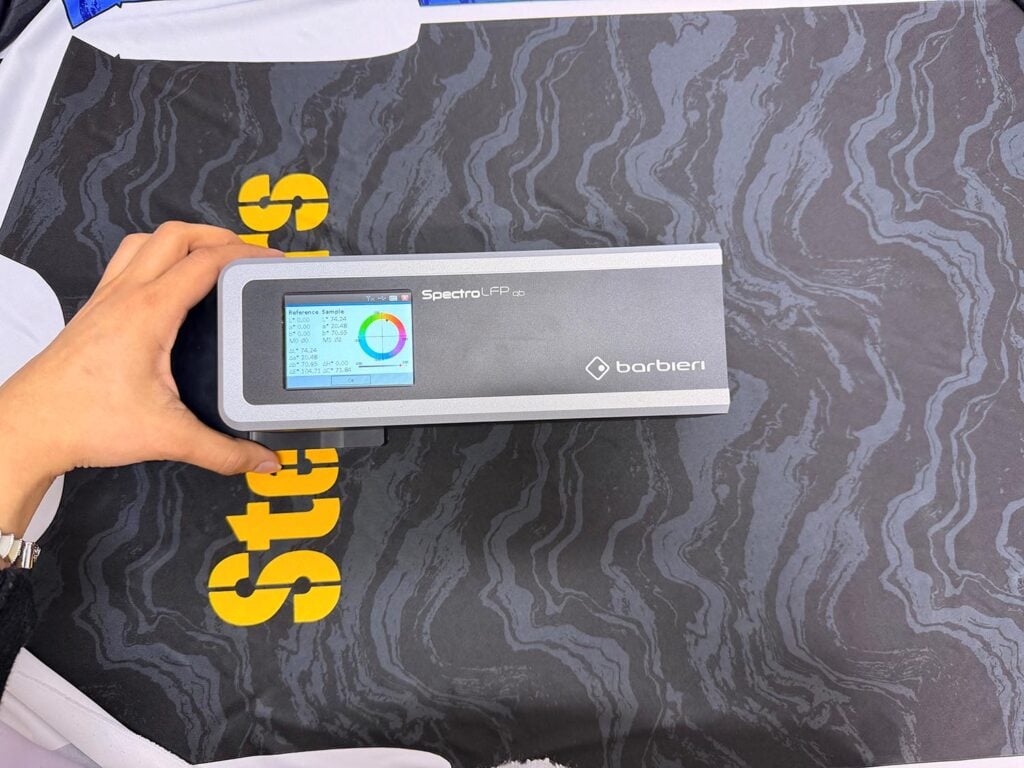
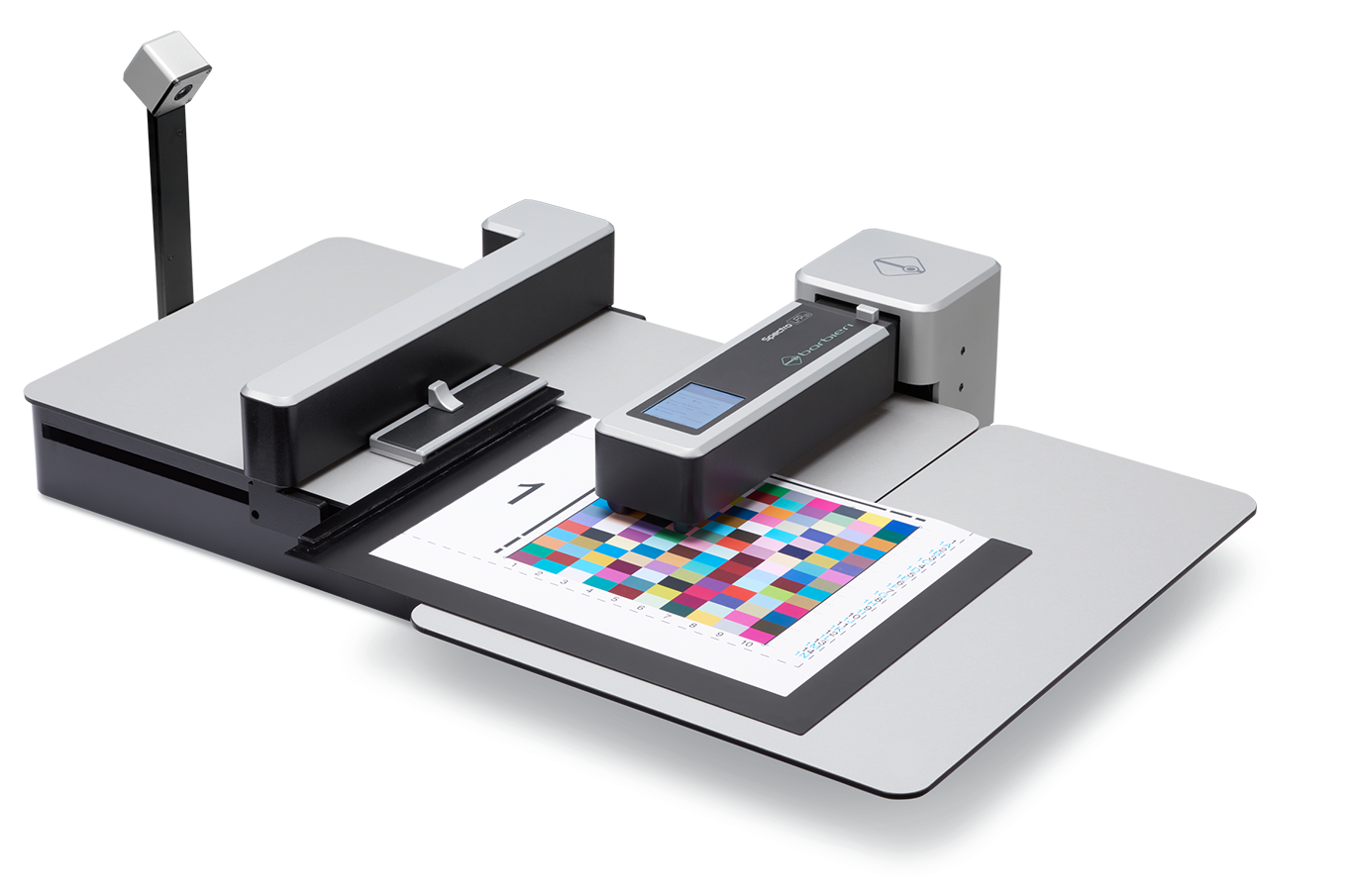
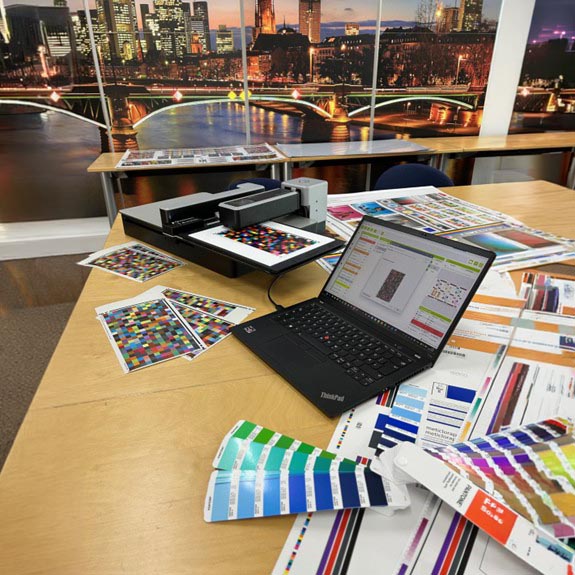
Barbieri spectrophotometers are developed for professional digital printing applications and provide repeatable spectral data across a wide range of printing technologies and materials.

Different measurement conditions, apertures, sample handling options, and reflection or transmission modes allow the measurement workflow to be adapted to the specific application.

What Makes Color Control Across Ink Technologies Difficult

Different ink and material interactions

Aqueous, solvent, UV cured, latex, sublimation, textile, and toner based systems interact differently with coatings, material structures, drying, curing, transfer, and finishing processes. These combinations influence color gamut, surface appearance, opacity, and measurement repeatability.

Optical brightening agents and illumination conditions

Many paper and textile materials contain optical brightening agents that fluoresce under ultraviolet illumination. The selected measurement condition can therefore influence the measured color values and the comparability of profiling data. M1 measurement conditions are particularly relevant when fluorescent materials must be evaluated under a defined D50 related illumination condition.

Software and workflow compatibility

Different printers and production systems are managed through RIP, profiling, press management, and quality assurance software. Reliable device support and compatible measurement data are essential for efficient calibration, ICC profiling, and verification. Compatibility should be confirmed for the required instrument, software version, measurement condition, and application.

Where Color Measurement Fits Across Different Ink Technologies

01

Printing condition characterization

Measure the color behavior of each printer, ink set, print mode, material, coating, and finishing combination as the basis for accurate profiling.

02

ICC profile creation

Print and measure profiling charts to create ICC profiles for the specific printer, ink, print mode, material, and process combination.

03

Production quality control

Measure control charts or production samples at defined intervals to identify color deviations and verify consistency between jobs, materials, batches, and production runs. Measurement data can help distinguish process drift from changes in materials, inks, printer condition, or finishing parameters.

Barbieri Instruments
04

Cross-technology color matching

Use spectral reference data and defined tolerances to improve color consistency across different printers, ink technologies, materials, and production locations.

Complete your Setup

Recommended Add ons

Complete your measurement setup with accessories that handle the full substrate range associated with every ink technology.
Electrostatic Sample Holder

Electrostatic Sample Holder

Holds flexible substrates flat without adhesive for clean, repeatable measurements.
Uses an electrostatic charge to keep flexible non-textile substrates such as paper, film and thin plastics flat during measurement. Avoids residue or damage that adhesive holders can leave on sensitive materials. Ideal for graphic-arts and packaging substrates where surface integrity matters.
Polarization Filter

Polarization Filter

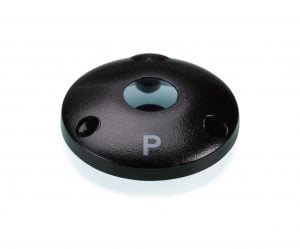
For eliminating first surface reflectance on glossy and metallic substrates.
The Polarization filter attaches to the Spectro LFP qb measurement head to suppress first-surface reflections from glossy, metallic and varnished substrates. It enables M3-compliant measurements per ISO 13655 and is essential when measuring polarized materials in graphic-arts and packaging color management workflows.

See how industry leaders use Barbieri.

Packaging & Label

CGS ORIS GmbH

CGS ORIS GmbH is a leading developer of color management solutions, contract proofing systems, and workflow software for the printing industry.
Textile

Sync-Innovation

SYNC-INNOVATION is a Japanese one-stop shop for consumer goods, integrating design, production, inventory, and delivery for major e-commerce platforms.
Textile

FUTURE FASHION

The company operates in the garment manufacturing industry, with a strong focus on sportswear production and sublimation-based textiles.

Need Help Choosing the Right Solution?

Scroll to Top
Cookie Consent with Real Cookie Banner